
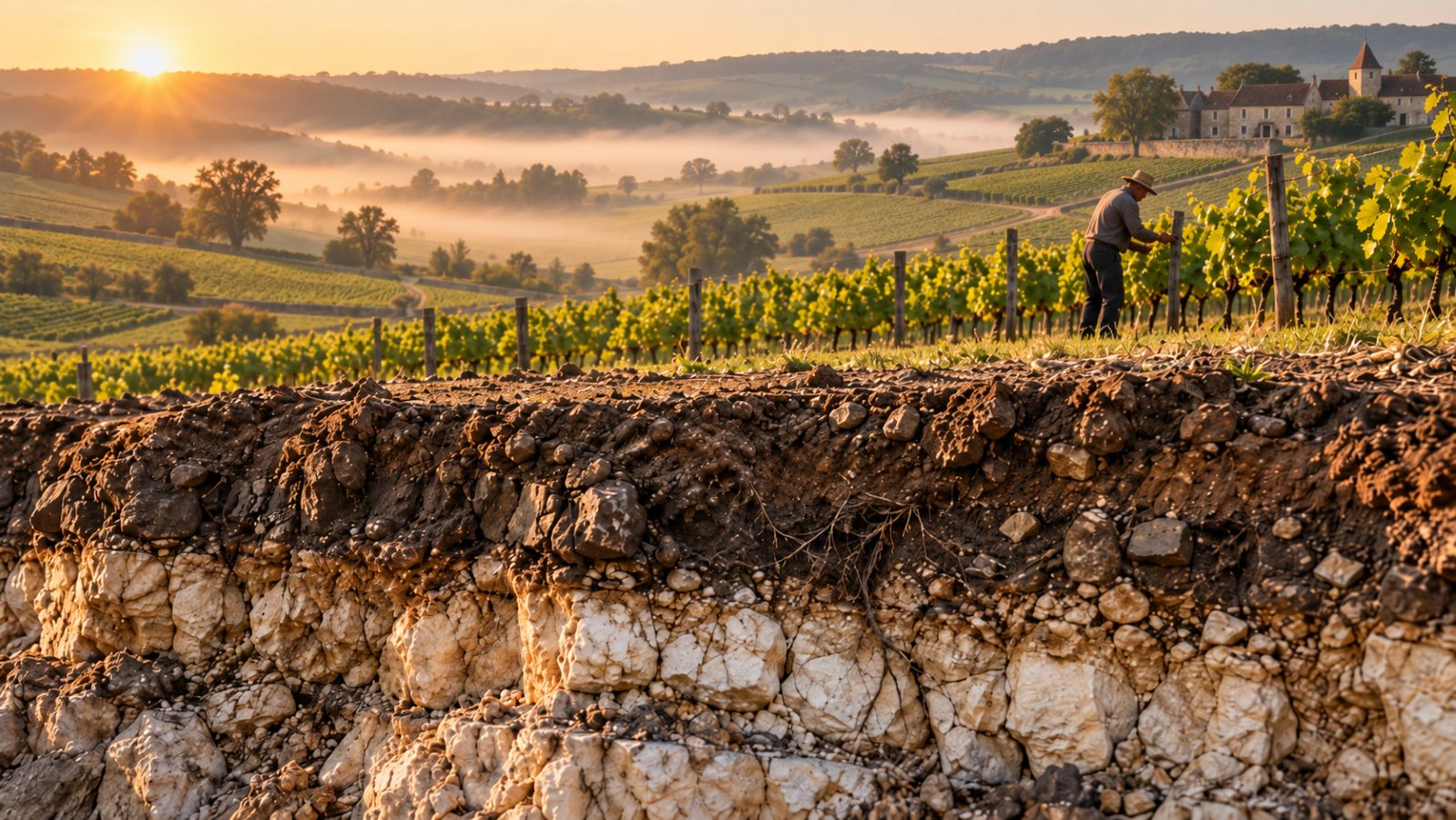
Terroir certainly exists. It’s just that almost everyone sees something different in it.
A bed is a simple concept. Ask a hundred people to draw one, and you’ll get a hundred different beds: a bunk bed, twin beds, a hospital bed, a mattress on the floor, perhaps even a sofa. Yet, everyone understands what ‘bed’ means. I call that the ‘universal bed’, with a nod to Plato: we all picture something different and still understand each other.
Terroir works in much the same way. Everyone inside and outside the wine world knows what it means. Or at least has a feeling or a vague image of it. Soil, climate, aspect, grape variety, perhaps something about tradition. Until you ask where exactly terroir begins and ends. Then a seemingly clear concept suddenly becomes a lot less tidy.
People are part of terroir too
Terroir has long been about much more than soil and climate. In 2010, the OIV set down an international definition centred on the interaction between a physical and biological environment and the viticultural and winemaking practices used there. Collective knowledge plays a part too. Those interactions give products from the area their distinctive characteristics.
That is a broad definition, one in which the grower’s choices also count. The grape variety, rootstock or pruning system they choose all have an influence. Water management matters. So does the timing of the harvest. According to the OIV, winemaking and ageing methods typical of a wine region can also belong to terroir.
Extend that thought far enough and every wine has terroir. Simple wine included. Or wine from a high-yielding vineyard. Even the plonk you find pleasant but hardly interesting. Those grapes grew somewhere, under particular conditions, and people made choices. That obviously doesn’t mean every characteristic of such a wine is caused by terroir. Cork taint is still cork taint.
Every wine has terroir. Every wine has acidity too, and yet ‘firm acidity’ tells you something about a wine. The difference lies in precision. ‘A cool, limestone-rich plot facing north’ tells you something. ‘A wine with terroir’ tells you little because in the end that applies to every bottle. Yet ‘a wine with terroir’ is exactly the kind of phrase that appears on labels, websites and in shops. Nobody promotes a wine by announcing that it has acidity.
The further you look, the more complicated it gets
In early July, researchers from around the world gathered in Angers for TERCLIM 2026, the joint International Terroir Congress and ClimWine Symposium. It showed just how many variables hide behind that single word. Scientists are mapping how vineyards differ from one another. They also want to understand which factors cause those differences and how strong their influence is.
In Burgundy, around Morey-Saint-Denis and Chambolle-Musigny, researchers installed 112 temperature sensors. Minimum temperatures within the area varied by almost 2.5 degrees. Topography explained those differences well. For maximum temperatures, that worked far less well. At bunch level, soil management and canopy management probably play a role too. Even with something as seemingly simple as temperature, the place appears to be only part of the story.
Another study in Spain followed Tempranillo on different rootstocks for ten years. For some traits it took five to seven years before a stable ranking emerged. With new rootstocks, that order still hadn’t fully settled after a decade. Every time one component of terroir becomes clearer, other variables appear alongside it.
That is terroir up close. An endless stack of factors that influence one another and change over the years as well. Science is trying to open that black box piece by piece. In the wine trade, on websites and labels, all that complexity is often reduced to one handy word: terroir.
A beautiful black box
That, I think, is a large part of terroir’s appeal. No wine label can explain how temperature, water, soil, plant material, biodiversity, and human choices have influenced one another over the years. ‘Terroir’ sums all of that up. We constantly use words with entire worlds behind them. ‘Bed’ works. So does ‘quality’.
In wine, terroir therefore easily takes on extra weight. The word tells you where a wine comes from and at the same time suggests authenticity, typicity and even quality. Producers love to talk about the special terroir of their wine. Appellations are based on geographical differences. Classifications then create a hierarchy within such an area. And somewhere along the way, a price tag gets attached.
There are good reasons for that, of course. A place can genuinely be special and produce a measurably different result. At the same time, different kinds of claims easily blur into one another. A difference in soil or temperature is one thing. Recognising that difference in a wine is another. The step to quality, and then to price, requires a fresh judgement each time.
Does difference matter?
Two vineyards demonstrably differ. One is warmer, the other holds water longer. The soil structure differs, and so does the aspect. Such differences carry through into the grapes and eventually into the wine. That is exactly where terroir research becomes interesting. What does that difference mean to the drinker?
A premier cru vineyard can lie a hundred metres from a lower-ranked plot. Perhaps you can taste a difference between the wines, but that doesn’t establish that you’ll like the premier cru better. Still, we take that step easily. A special place makes a special wine. A special wine gains more value. More value leads to a higher price.
That may all be true, but these are separate steps. Science investigates whether places differ and how those differences affect the vine. It also tries to establish which characteristics then make it into the wine. How recognisable is that difference to the drinker? How much does it matter? And how much value are they willing to attach to it?
Difference is not preference
Perhaps that is why we sometimes expect something of terroir that the concept simply cannot deliver. Terroir can help you understand why a wine is the way it is. It doesn’t tell you how much pleasure you’ll get from it. A famous soil can yield wine you find dull. A grand cru can be technically and historically fascinating while you’d rather have another glass of that simple wine.
Conversely, the specific character of a place sometimes matches exactly what you’re looking for. Then terroir takes on real meaning for the drinker. That interplay of place and human choice produces something you enjoy drinking and might want to drink again.
Science can explain ever more precisely why two places differ. Appellation rules and classifications define which differences count. Does someone want to drink the wine? And are they willing to pay for it?
This article first appeared in Dutch on Winecastr.com. The English version was translated with AI support and checked before publication.