
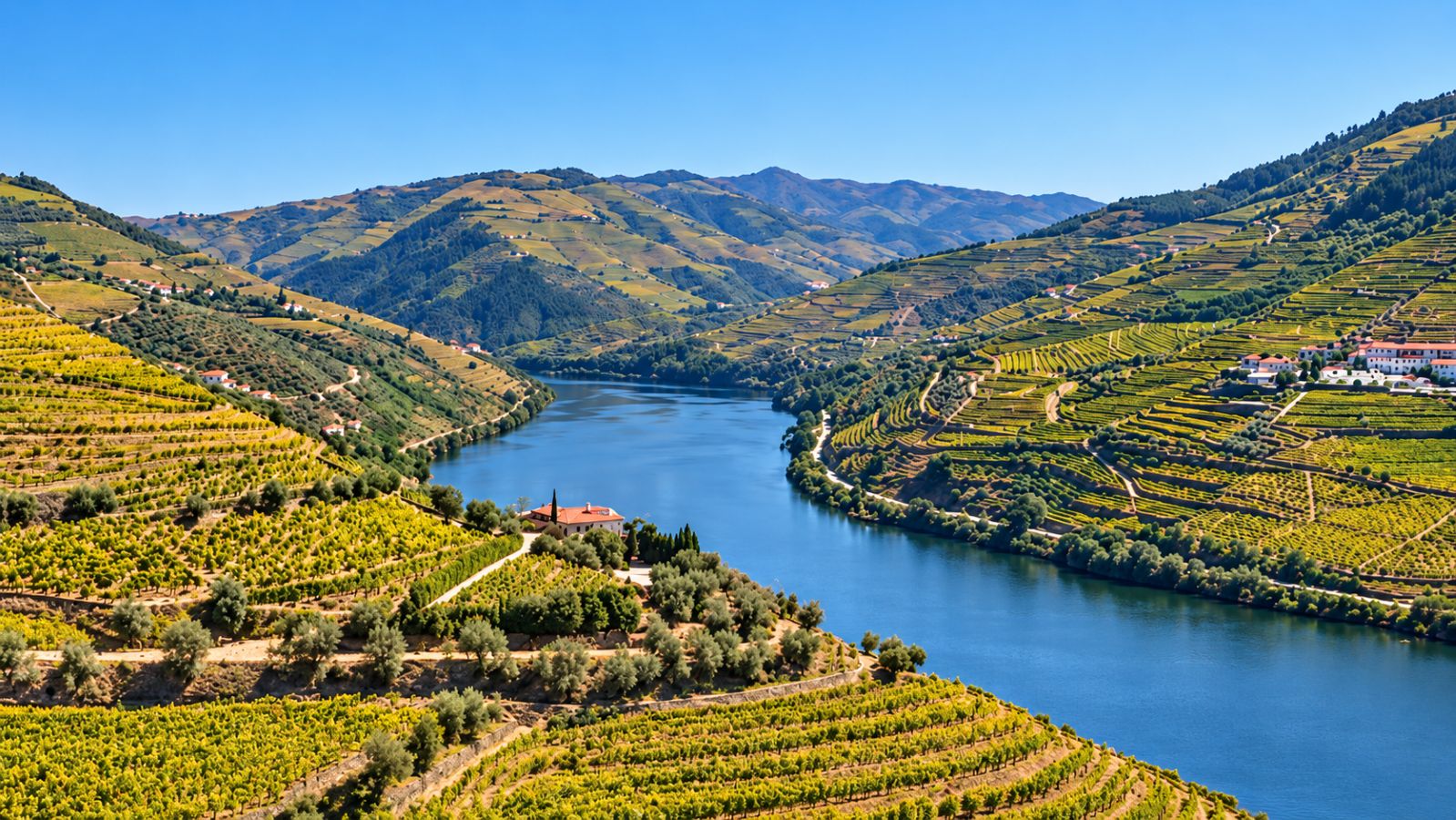
The Douro expects 25% more wine this year. Portugal is also paying growers to leave part of it on the vine.
That tells you where the market stands.
On 4 September, the government approved €12 million in emergency support for growers who cannot find a buyer for their grapes. Minister António Leitão Amaro put it plainly. Last year the state paid 50 cents per kilo to send grapes to distillation. This year, he said, it would pay the same 50 cents for grapes left unpicked.
The small print is less generous. Support is capped at €1,125 per hectare. That equals 50 cents only if a vineyard yields 2,250 kilos per hectare. As Público reported on 26 September, for many growers the effective payment will be closer to €0.27 per kilo. The payout compares each grower’s declared 2026 crop with their own five-year average. And nothing is paid until IVDP inspectors have seen the grapes still hanging.
Cold comfort in a region already struggling with prices.
A bigger harvest, a smaller market
Now the twist. Portugal’s wine institute IVV expects national production to rise 12% in 2026/27, to 6.7 million hectolitres. Yet that figure sits 4% below the five-year average. In the Douro, production is expected to rise 25%.
In other words, Portugal is facing a below-average harvest that is still too big for its market.
That changes the question. The Douro can clearly grow grapes. What it lacks are buyers willing to pay prices that cover the cost of farming steep schist terraces.
Paying people not to harvest is a blunt answer. The grapes are there. The buyers are not. Cooperatives also get access to a €100 million credit line. That buys time and tank space. It buys no customers.
Lisbon calls the measure a one-off and promises a permanent fund for future crises.
The second half of that sentence quietly cancels the first.
The Douro is not alone. France is paying growers to pull out vines. South Australia is helping producers leave wine growing altogether. California is losing vineyards and winery capacity.
The instruments differ. The direction does not.
Wine regions built for a larger market are now learning to shrink.
For the Douro, that makes this year’s larger harvest hard to celebrate. Some grapes may simply be worth more unpicked.