
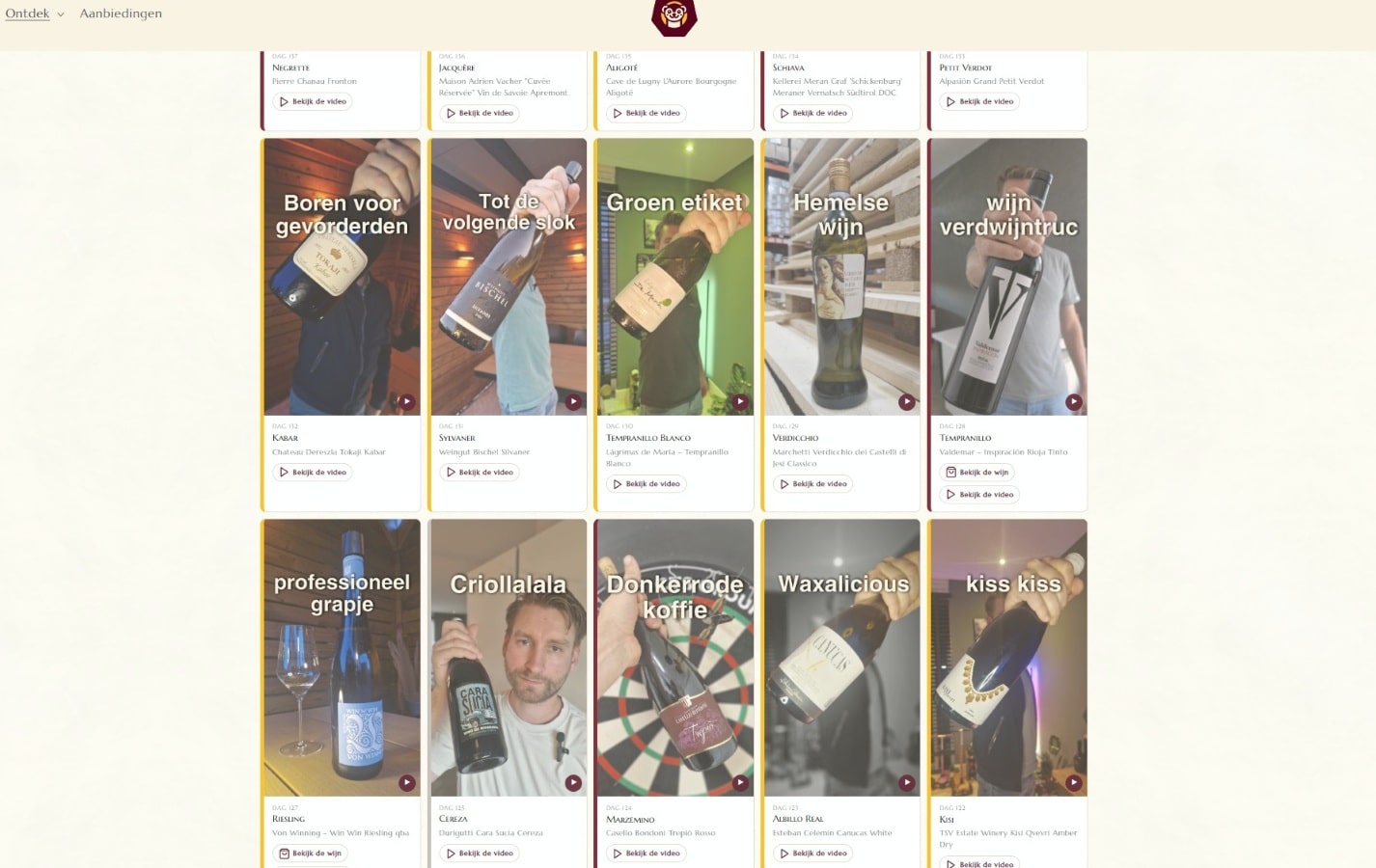
A grape variety only gains value for consumers once it makes choosing a wine easier or more interesting. Koen van Dam is testing that idea in a rather ambitious way. With ‘365 grapes in 365 days’, he sets out to find, taste and review on video wines made from 365 different grape varieties. The counter currently stands at 212.
The project is cleverly designed. Research, tasting, video, marketing and sales all come together. Koen learns as he goes, his audience watches along and obscure grapes get attention. His Dutch online shop, Wijn met een boodschap (‘Wine with a message’), is the commercial engine behind the experiment.
My column ‘The customer is king. As long as they follow our wine rules’ was about a wine world that likes to treat customers as pupils. Grapes, appellations, soil types, producers, and vintages form the compulsory curriculum. Koen responded that his shop starts from the customer. His reply ended with a concrete question: how do you put that principle into practice?
A good starting point: begin with the reason someone picks a wine. What role does the bottle play during an evening, at the table or at a particular moment? Grape, producer, and history then add context, yet they are rarely the headline act.
Perhaps part of the answer already lies in Koen’s own project.
Counting 365 grapes gets complicated fast
Counting grape varieties is easier than deciding when you are actually dealing with a distinct variety. Trebbiano Toscano goes by Ugni Blanc in France. Primitivo and Zinfandel are genetically the same variety. Cannonau is Grenache. On top of that come colour mutations, local names and blends containing several varieties.
For his project, Koen looks for wines in which one variety clearly dominates. That sounds simple. Finding the wines often isn’t. Some local varieties are planted on such a small scale that buying a single bottle becomes a quest of its own.
As a result, the project quietly changes character. A list of 365 grape names also becomes an investigation into which varieties are available as a single-variety wine, how you explain them and whether consumers buy them. That turns the abstract question of how many grape varieties exist into a much more practical one: what does the consumer actually gain from all those differences?
Consumers need something familiar
For many consumers, well-known grape varieties function as shorthand for a certain style of wine. Pinot Grigio may suggest something light, fresh, and dry; Sauvignon Blanc something crisp and aromatic; Verdejo a somewhat rounder style with riper fruit and a slight bitter note on the finish.
Such associations are often imprecise. Still, the grape name tells consumers enough to make a choice. They don’t need to become vinologists before they can order.
With Verdeca, Chenel or Saperavi, that prior knowledge is missing. Here the merchant or sommelier has to translate the grape into a style the customer already knows. Verdeca, for example, can be explained as a dry, fresh white with lively acidity, citrus and green apple: a little spicier and more exciting than a neutral Pinot Grigio.
This is where Koen’s project has real potential. His knowledge of 365 grapes can link unfamiliar names to taste preferences customers already have.
With Saperavi, he already does this. Koen sketches a profile that Primitivo drinkers will partly recognise: ripe dark fruit and power, with more freshness, tannin, and tension. An unknown grape immediately gets a familiar point of departure, without the differences being polished away.
Some customers want the unknown
For part of Koen’s clientele, unfamiliarity is precisely the reason to buy. They deliberately choose a wine from an obscure grape. A Georgian Saperavi or the South African Chenel mentioned earlier can be attractive because there is something to discover.
Koen’s project therefore serves both recognition and curiosity. One customer looks for a foothold in existing preferences. Another wants precisely what they do not already know. In both cases, the grape name has to add something to the choice.
One bottle mainly represents itself
Koen soon noticed how strongly style can vary within a single variety. Two Verdecas, one of them oak-aged, tasted so different to him that they could have come from different grapes. Tasted blind, a South African Tannat made him think of Chilean Cabernet Sauvignon.
So tasting 365 grape varieties mainly produces knowledge about 365 individual wines. For well-known varieties, consumers have many more examples to attach to a general flavour profile. With Verdeca, Chenel and other rare grapes, the individual wine weighs more heavily than the grape name.
Saperavi: is it the grape or the bottle that sells?
In Koen’s sales data, Saperavi performs remarkably well: 452 bottles to 114 buyers. Of those 114, eleven later placed another order. Six bought the same Saperavi again; nobody went on to choose a different Saperavi.
That distinction matters. Repeat purchases of the same wine show that the bottle worked; choosing another Saperavi would be stronger evidence that the grape variety itself had become part of the customer’s next choice.
What’s more, Taoba and Bedoba arrive in the shop with considerable baggage of their own. Both are widely available on the Dutch market. Taoba holds a score of 8.5 in De Grote Hamersma, the leading Dutch wine guide. The labels also catch the eye instantly: Taoba with a large blue-and-white peacock, Bedoba in black, white, and gold with a central female figure.
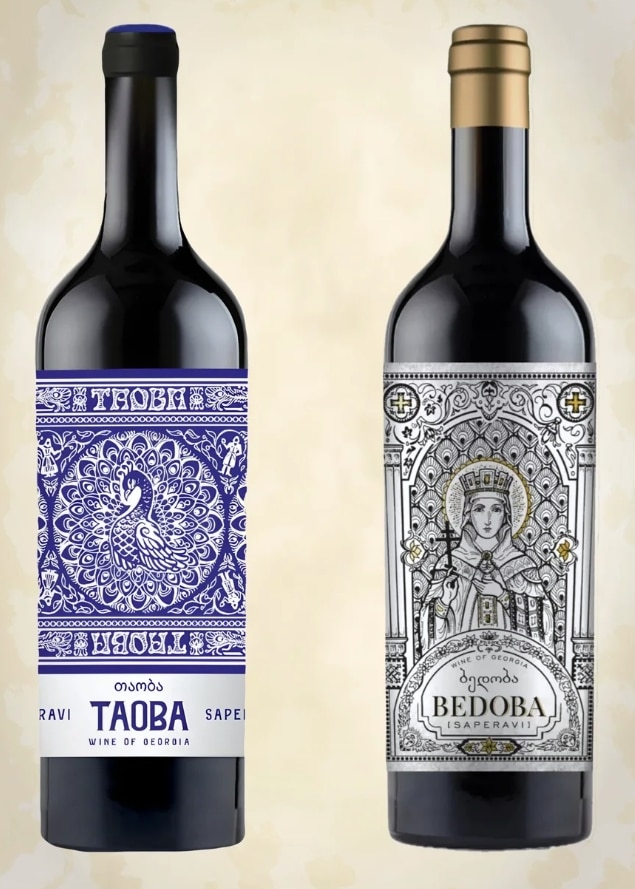
In these cases, Saperavi never sells separately from the rest of the bottle. Taoba and Bedoba also come with a price, a style, a producer, an origin, a rating and a striking label. Online, that label even appears before the technical information. The sales figures therefore mainly reflect the success of Taoba and Bedoba as complete products. The share of the grape name in that success is difficult to isolate.
365 grapes as a toolbox
The greatest value of ‘365 grapes in 365 days’ lies in the translation to the customer. Koen is building knowledge about grapes, styles, producers, prices, and availability. At the same time, his shop shows him which wines people actually choose.
Koen’s range includes many grape varieties, yet sales are highly concentrated: nine varieties account for half of all bottles sold. The offer is far broader than the buying behaviour. The project’s value lies mainly in what Koen can do with the knowledge he gains.
The 365 names thus become his toolbox. That knowledge gains commercial value once Koen can quickly determine which wine fits what a customer is looking for: a taut white, an alternative to Primitivo or something completely unknown.
What the second bottle reveals
An unknown grape can make the first bottle stand out. The more revealing question is what happens next. As I argued in ‘The second bottle’, the next choice shows which part of the first experience the customer carries forward.
A second bottle of the same wine suggests that the wine itself delivered what the customer was looking for. If the customer instead chooses another wine made from the same grape variety, the grape name has started to work as a point of recognition. And if the next purchase comes from the same merchant but involves an entirely different grape, perhaps the trust lies elsewhere: in the person who made the recommendation.
For the curious enthusiast, one introduction may be enough. After all, they wanted something unknown and got exactly what they were looking for.
This article first appeared in Dutch on Winecastr.com. The English version was translated with AI support and checked before publication.