
The second bottle is the most honest tasting note. In my experience, the sector celebrates the first bottle, but the second bottle pays the bills.
People often buy the first bottle out of curiosity. An unfamiliar region helps. So does a friendly winemaker. A tasting, a strong story or an attractive label can also pull someone over the threshold.
Yet the consumer gains little from yet another story about organic farming, local grape varieties and family tradition. Such stories may well be true, and they win a lot of sympathy. They rarely answer the question that ultimately matters: why does this bottle come back to the table?
Studio Cru, a communication agency specialised in wine and gastronomy, organised an online tasting of Azienda Agricola Paglione from Lucera, in northern Puglia. All the ingredients of the familiar winemaker portrait were present. A family estate. Organic farming. Local grape varieties. Spontaneous fermentation. Unfiltered wines. A virtually unknown DOC with a difficult name, Cacc’e Mmitte di Lucera, where red and white grapes go into the same vat.
That is only where it starts, though: what need does this wine meet once the curiosity has worn off?
Paglione starts with farming
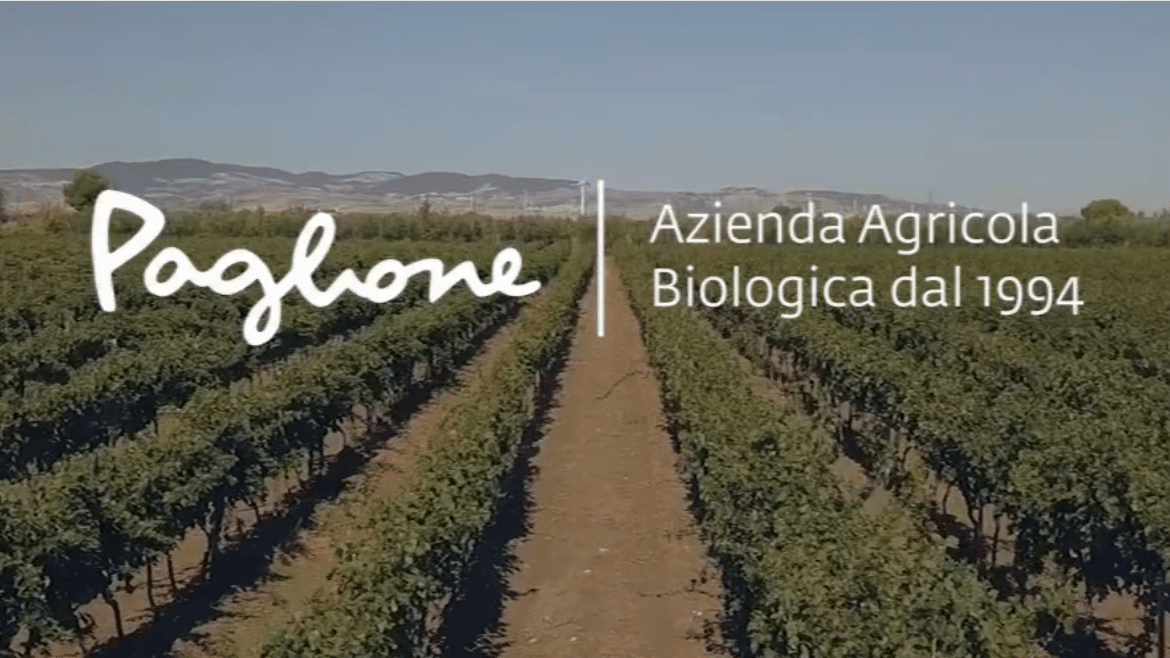
Paglione is first of all a farm, and only then a winery.
The estate lies in Lucera, between the Tavoliere delle Puglie and the hills of the Subappennino Dauno. Wheat fields, olive trees, almond trees and tomato fields surround the vineyards. Here, wine is one of the products of a mixed farm.
Nicola Faccilongo, the current owner and grower of Paglione, kept returning to the same idea during the online tasting: a tomato should taste like a tomato. The same goes for wine. The grape must stay true to itself in the glass.
That principle shapes the way of working from vineyard to cellar. The grapes come from the estate itself, and the vineyards are farmed organically. In the cellar, Paglione opts for spontaneous fermentation at controlled temperature. The wines go through full malolactic fermentation and are bottled without filtration or fining.
Nicola therefore prefers to call his wines artisanal rather than natural. In his view, wine begins precisely where people intervene. Let nature take its full course, he argues, and you end up with vinegar rather than wine.
Cacc’e Mmitte: from necessity to identity
Cacc’e Mmitte di Lucera came about because small growers shared pressing and fermentation facilities. Red and white grapes were processed together, because the growers used whatever was available at the time.
The dialect expression ‘cacc’e mmitte’ roughly means ‘take out and put in’. The name refers to the palmenti, the stone pressing and fermentation vats that small farmers used for a short period. As soon as one grower’s must was out, the next grower’s grapes could go in.
Paglione now has its own tanks, decides for itself when the grapes are processed and has far more control over the vinification. That removed the original necessity. During the tasting I therefore asked Nicola why he keeps making this style of wine.
His answer was unambiguous: ‘an identity necessity’, a necessity that arises from identity.
Historical necessity has thus become cultural necessity. That only gains meaning when the old form works again today. At Paglione, this happens above all in Caporale, the Cacc’e Mmitte with which the estate defines itself most sharply.
Caporale: identity at the table
Caporale is Paglione’s identity card.
The blend consists of 60 percent Nero di Troia, 25 percent Montepulciano and 15 percent Bombino Bianco. That last variety is white. The wine ferments spontaneously in stainless steel, gets 12 to 15 days of skin contact and then matures further in stainless steel and in bottle. The alcohol content is 14.5 percent.
Nicola calls Caporale his flagship and his ‘identity card’. At the same time, he describes the wine as direct, honest and easy to drink. A wine for food, company and conversation. The drinker can understand it without technical baggage.
That is where the second bottle sits. Someone can buy the first one because of the name, the origin or the presence of Bombino Bianco in a red wine. The repeat purchase happens when Caporale proves to work better at the table than its story: with ragù, braciola, pecorino, broad beans and other dishes from the southern Italian cuisine.
Braciole are thin, rolled slices of meat, filled with cheese, garlic and parsley, among other things, and slowly braised in tomato sauce.
The limits of rosé
Mania immediately shows how little the colour category ‘rosé’ says about a wine. The wine is a modern interpretation of the old Cacc’e Mmitte: light orange-ruby, transparent and stylistically somewhere between rosé and light red.
The wine consists of Nero di Troia, Sangiovese, Montepulciano and Bombino Bianco. The four grape varieties are harvested at the same time and fermented together based on average ripeness. The skin maceration stays short.
For many consumers, rosé is a colour promise. Pale. Cool. Dry. Summery. Carefree. In hospitality, hardly anyone asks whether the rosé comes from Provence, Navarra, Tavel or Puglia. The order simply reads: ‘Just a rosé, please.’
Mania fits the consumer’s picture of rosé very poorly. During the tasting, Nicola deliberately poured 2024 next to 2022 to show that this rosato develops. He places the wine between light red and the common image of rosé. Nicola named pizza, orecchiette with tomato and rocket, fresh cheese and goat’s cheese as fitting dishes.
Tradition with modern technique
Mania is nostalgia brought back to life with modern means. Nicola bases his vision on family memories, on older examples from the cantina sociale, a cooperative winery, and above all on what his grandfather told him about the Cacc’e Mmitte of the past.
That old Cacc’e Mmitte differed fundamentally from today’s wine. The traditional version often had a lot of residual sugar. Fermentations were less complete, and the wine had to be drunk before spring.
By controlling the temperature tightly, selecting more strictly and letting the wine ferment fully, Paglione translates that memory into a more stable wine. The historical character of Cacc’e Mmitte lives on, while the execution is adapted to present-day means.
Do you have to learn to drink wine?
Dilucēre and L’Eclettico share the same white grapes as their basis, yet offer a very different drinking experience. Dilucēre is straightforward: citrus, peach, white flowers, a light almond note and a saline finish. Excellent with light dishes or as an apéritif.
Through skin contact, L’Eclettico gains more texture, the familiar Italian touch of bitterness and plenty of grip. Especially in colour, it recalls orange wine. Nicola puts that label into perspective. His grandfather and great-grandfather already made white wine with skin contact. At the time, it was a common way of making wine.
During the tasting, I asked Nicola whether you have to get used to such wines. After all, we learn to appreciate many flavours only after tasting them more often. Think of coffee, olives and tomatoes. With wine, we always judge the first sips based on what we already know.
Nicola steered the comparison back to his tomatoes. In his view, the product must ultimately convince by itself. A good tomato tastes recognisably of tomato. With his wine, he looks for the same thing: the grape must remain unmistakable, even when the style falls outside our familiar frame of reference.
SantaJusta: patience is a virtue
SantaJusta needs a lot of time to develop. Nicola cites an ageing potential of as much as 20 to 30 years. The wine is made from Nero di Troia, a grape variety whose development he compares to Nebbiolo. Young, the wine can be austere and rich in tannin. After sufficient ageing, it gains more spice, depth and length, according to Nicola.
From tradition to appreciation
The wines of Paglione show what happens when a producer focuses less emphatically on a familiar flavour profile. Some wines are easy to place. Others fall outside the drinker’s familiar frame of reference. That applies above all to Mania and L’Eclettico, which are hard to fit into the well-known colour and style categories.
Here lies a limit to the producer’s story as well. Tradition, local grapes and a historical way of making wine can explain why a wine exists. They do not yet determine whether the consumer wants to drink it again. Getting used to it can produce appreciation, but that outcome is never guaranteed.
After the first bottle
Curiosity can sell the first bottle. Cacc’e Mmitte, Bombino Bianco, Nero di Troia, orange wine, organic farming and family tradition each provide a reason to try something unfamiliar. After that, the initiative shifts from producer to consumer.
The producer can explain why a wine exists, where it comes from and which history lives on in it. The consumer, however, decides what to use it for, whether to get used to the style and ultimately whether to buy it again. That is the difference between a story that draws attention to a bottle and a wine the consumer returns for.
The second bottle is therefore a stricter yardstick than a tasting note. Technical quality and an interesting flavour can arouse interest. Only a repeat purchase shows that the consumer has found a reason of their own to come back.
That is why Paglione is so interesting. The estate encourages the consumer to ask the simple question: does this wine taste like itself, and do I want to bring it home again?
With tomatoes, that goes without saying.
With wine, strangely enough, we started explaining.
This article first appeared in Dutch on Winecastr.com. The English version was produced with AI assistance and edited by the author.
Last updated: 24 September 2026