
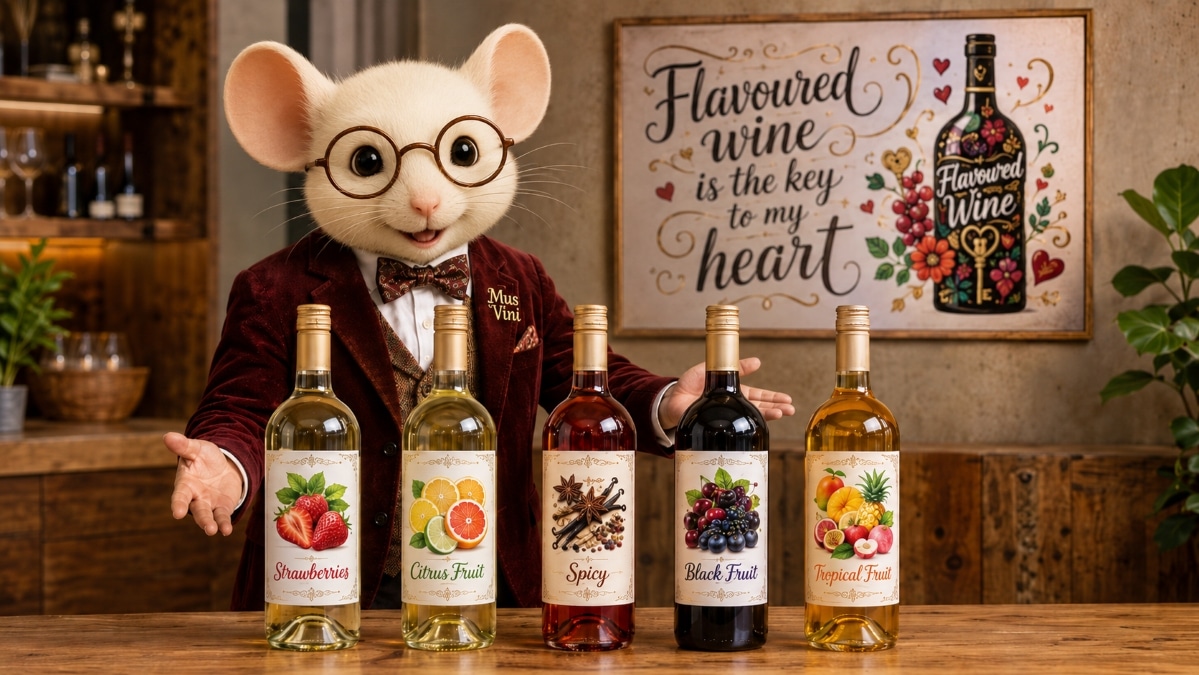
For decades, the traditional wine world has pushed a single message: the consumer needs to learn. Learn terroir. Learn to love dryness. Be patient with tannins. Meanwhile, a Californian wine spiked with pineapple juice and chilli is growing three times faster than Prosecco. In many ways, the wine world has brought this on itself.
Flavoured wine—wines with added flavourings like mango, watermelon, or Calabrian chilli—is growing in the United States at an average rate of about 25 percent per year between 2019 and 2025. Prosecco grew roughly 7 percent over the same period. Champagne is flat. In 2024, global wine consumption fell by 3.3 percent compared with the previous year, to an estimated 214 million hectolitres—the lowest level since 1961—according to the OIV’s State of the World Vine and Wine Sector in 2024 report.
Those numbers can look like simple market corrections. In reality, they are signals that the market is moving under our feet.
Consumers have been asking for something else all along
Lay the numbers side by side and a pattern emerges. Recent research by Wine Market Council and Quini shows that a significant share of wine drinkers feel disappointed when a bottle does not deliver the flavour it seems to promise. Accessibility and recognizability matter a great deal. A bottle with “watermelon” on the label delivers exactly what it promises.
At the same time, consumers have been saying for years that they want to drink dry. They say it in surveys, on social media, and at the counter in the wine shop. Yet, they regularly walk out with something sweet. In my Dutch article ‘Make it sweet, call it dry – waarom we stiekem toch van zoet houden’ I explored this mechanism in more depth: our preference for sweetness is largely biologically wired, genetics plays a role, and the line between “soft” and “sweet” is far blurrier in perception than it is on the label.
Flavoured wine understands this. The traditional wine world still behaves as if it is not true.
Less alcohol has been on the wish list for years
A second pattern: most flavoured wines sit somewhere between about 5 and 7.5 percent alcohol. That is low, even compared with the de-alcoholized wine category that has been trying to reinvent itself for years. As I argued in ‘Minder alcohol, evenveel wijn’, consumers increasingly want less alcohol without sacrificing flavour and sensory impact. Flavoured wine solves that puzzle in a different way: instead of trying to rescue what is left after dealcoholization, it adds flavour back in from the outside.
Both strategies respond to the same underlying need. The traditional wine world chose the expensive, technical route. The flavoured wine industry chose the direct one.
Europe is behind, demand is not
America may feel far away. Brands like Stella Rosa and Barefoot Fruitscato are marginal in the Netherlands and most of Europe. But the underlying forces are the same. The no/low‑alcohol category has been growing steadily in the UK, and producers and retailers across Europe are paying close attention. The European Union has now formally recognized alcohol‑free wine as its own category, a move that shows consumer demand has reached the point where it shapes regulation as well as shelf space.
Better accessibility, lower alcohol, more recognizable flavour. European consumers are asking for the same things as American consumers. Europe’s wine industry is simply moving more slowly.
France blinks first—but calls it something else
The most telling signal comes from France itself. In early 2026, the French government legalized édulcoration for AOC wines: sweetening dry wine after fermentation by adding concentrated grape must or juice. I wrote in more detail about this in ‘The sweet capitulation of French wine dogma’. Producers cited market pressure as the main driver. Consumers, they argued, want wines that are more accessible, softer, sweeter. The AOC rulebook bent to accommodate that reality.
When a system that has been treated as untouchable for decades quietly adjusts to consumer preference, that says more about the state of the market than any growth curve.
Ozempic makes things more complicated, not simpler
In early 2026, SevenFifty Daily spoke with producers about the rise of flavoured wine. Stella Rosa CEO Steve Riboli sees GLP‑1 users as a promising audience, arguing that these medications shift taste preferences toward sweetness. “These medications change your palate, and you crave sweet things,” the article quoted him as saying.
The data on this is still limited, but emerging research suggests that GLP‑1 agonists can indeed affect taste and reward pathways, including those related to alcohol. These same drugs also dampen the dopamine response that alcohol usually triggers, and many users report that they drink less or feel less reward when they do drink. Those two effects sit side by side: the palate may tilt more toward sweet, while total volume goes down. For flavoured wine, that means a potential opportunity in a smaller niche—and a bigger challenge to keep that niche engaged over time.
The contrast with France is striking: Riboli says the quiet part out loud. The French regulator says roughly the same thing, only in legal French.
Gen Z is repeating the pattern, not breaking it
Gen Z is drinking less. That is true, and the numbers back it up. But the idea that younger generations are abandoning wine for good is too simplistic. Over the past few decades, generational patterns have tended to repeat: as people age and their disposable income grows, many of them eventually end up in wine, even if they started with other categories.
In ‘One swallow does not make a summer. But you still notice it – Gen z and wine.’ I argued that flavoured wine can play a role in that journey. Not as a final destination, but as an entry point. The traditional wine world has largely left that entry unguarded. Whoever wins twenty‑somethings with mango and chilli today may see them return later for Burgundy.
The gap was self‑inflicted
The rise of flavoured wine is not an attack on the wine world. It is an answer to a question the wine world has ignored—or written off as unworthy—for years. Accessible, sweet enough, low in alcohol, immediately understandable. That is what a growing slice of the market actually wants.
The traditional sector chose to leave that space empty. At the counter of the better wine shop, on the restaurant wine list, in the campaigns of major brands—the language has remained the same: terroir, complexity, patience. Meanwhile, someone else walked in and filled the gap.
That space is still there. Whoever chooses to occupy it now will not need to fight to win it back later.
Frequently asked questions
What is the difference between flavoured wine and naturally aromatic wine?
Aromatic varieties like Gewürztraminer or Muscat owe their perfume to the grape itself. Flavoured wines get their character from added flavourings after fermentation. The core winemaking is the same—grapes, fermentation, wine—but the flavour is topped up later.
Is flavoured wine growing in Europe as well?
For now, the category remains small in the Netherlands and the rest of Europe. The US market is five to ten years ahead. But the underlying consumer drivers—accessibility, lower alcohol, recognizable flavours—are very much present in Europe too, and are currently being served mainly through no/low wines and lighter styles.
Is flavoured wine a threat to traditional wine?
The overlap is larger than many in the trade assume. Flavoured wine partly attracts people who might otherwise stay out of the wine category altogether, and some of them later move toward more traditional wines. Threat is the wrong frame. So is competitor.
What does the growth of flavoured wine mean for the Dutch wine market?
The direct impact is still limited. The indirect impact is significant: the same consumer needs that are making flavoured wine big in America are shaping expectations here as well. Anyone who ignores those signals risks falling behind the curve.
This article first appeared in Dutch on Winecastr.com. The English version was produced with AI assistance and edited by the author.
Last updated: 18 September 2026