
Why the first bottle is easy, the second bottle is everything, and most wine marketing never gets that far.
‘… ils n’ont pas besoin de votre vin.’ This blunt and painful line comes from an article by Sharon Nagel on Vitisphere about Vinexpo Asia in Hong Kong. In it, Andrea Guillot of Domaine Guillot-Gonin says of China: buyers there are not waiting for wine producers.
Worse still: they do not need your wine.
That line lands harder than the language usually heard in the wine trade. In that language, the consumer ‘shifts’. They drink less alcohol, choose white wine or sparkling wine more often, and move towards cooler drinks and lighter styles.
In the same article, Nagel quotes Valérie Vincent, Director of Marketing and Business Development at Rhonéa in the Rhône Valley. According to Vincent, it was once possible to predict fairly well, region by region, which style of wine stood a chance. Now she sees the same movement everywhere: crisis, inflation, less alcohol, fresher drinks, white wines and sparkling wines.
That is the familiar pattern: when wine comes under pressure, the explanation usually begins elsewhere. With the consumer, inflation, the government, Brussels or, if all else fails, Trump. All of those can matter. But they still leave one question unanswered: does the sector itself connect closely enough with the way people want to drink today?
‘Shift’ sounds as though consumers stroll calmly from one preference to another. As if they wanted powerful red yesterday and suddenly fancy white Rhône or a spritz today. As if taste behaved like a weather map. But what if something more fundamental is happening? What if consumers are not just shifting, but withdrawing? Not from wine as a drink, but from wine as a given.
That is the real crisis. Not that people never want to drink wine again. Not that young people have all turned into puritanical water drinkers. Not that red is dead for good and white will save the world. No, the crisis runs deeper: wine has lost its automatic place at the table. The bottle is no longer a foregone conclusion. After all, consumers have plenty of alternatives. Beer has grown up. Cocktails are more accessible and available everywhere. Alcohol-free drinks have lost their stigma. Ready-to-drink offers convenience without explanation. With bitter, fresh, and light drinks, the occasion is instantly clear.
And wine? Wine still often asks to be understood, to be explained before it becomes usable. That is where the disconnect begins.
The wine world has no shortage of concepts for origin. Soil, grape variety, slope, aspect, old vines, yield, oak use, appellation, family history, vintage. And, of course, the biggest buzzword of recent years: terroir. All relevant; all things to wax lyrical about. But these days, consumers usually start somewhere else. Where does this bottle fit into my life? For which moment, which dish, with whom? What promise does this wine deliver on? Why this bottle rather than another drink? Why again?
Much wine marketing still gives an evasive answer. It tells you where the wine comes from, how it was made and why it is so special. But being special is not a set of instructions. A wine can come from limestone-rich soils, be fermented with indigenous yeasts and matured in used foudres, and still have no clear place in a drinker’s life. That sounds harsh, but it is exactly what the market shows.
You buy the first bottle out of curiosity. Out of sympathy for the winegrower or the merchant. Because of a good story. Because of the label. Because of a recommendation. Because of a tasting. Because of a discount. Sometimes even out of social pressure: you tasted for free, after all, so you feel you ought to buy something in return. But you buy the second bottle for a different reason.
You buy the second bottle because the wine has acquired a function for you. It went with grilled chicken. With roasted vegetables. With a Sunday afternoon, when red felt too heavy. With friends who wanted to drink, but did not want to be overwhelmed. With a light meal. With a warm evening. With a conversation that ran on longer than planned. For an anniversary, as a corporate gift or at a dinner where the name on the label counted for as much as the wine in the glass.
The second bottle is not a marketing achievement. The second bottle is proof that a wine has found a place. That is precisely where much of the sector has been complacent for too long. Too many producers have kept thinking from the cellar outwards. We make wine. We tell our story. We show our quality. After that, the market is expected to follow. And when the market follows less readily, that gets called changing consumer behaviour.
That is not entirely untrue, but it is only half a diagnosis. The term does more than describe what is happening in the market. It also determines where responsibility for that change is placed.
Other drinks do not necessarily win because they are better. They win, at least in part, because they communicate more directly. They say: fresh. Light. Bitter. Low in alcohol. Serve cold. For outdoors. For an apéritif. For now. To share. Wine still too often says: you need to learn to understand me first.
That attitude worked as long as wine held cultural sway. Wine stood for civilisation, table rituals, knowledge, gastronomy and good taste. If you did not understand wine, you were expected to educate yourself. But that balance of power has tipped. Consumers are less willing to be made to feel small by a bottle. They want to discover, but not to be steered. They want knowledge, but not a sermon. They want choice, but not a lecture beforehand.
That is why the line from China is so useful. ‘They don’t need your wine.’ Vitisphere describes China as a saturated market, one in which buyers have plenty of choice and price, margin, speed of sale and stock risk have come to weigh more heavily. My point is not that China stands as a model for every wine market. My point is that China makes visible, in fast-forward, what is happening more slowly elsewhere: wine has to prove all over again why it is needed.
For regions such as the Rhône, that is uncomfortable. A region that could long rely on red wine, power and generosity now has to explain that it can also offer white wine, freshness, lightness and renewal. Rhonéa seems to understand this. In the article, Vincent points to white Rhône, to the possible recognition of Beaumes-de-Venise as a cru blanc, to blanc de noirs and even to oak-aged muscat with a profile closer to a spirit than to a classic dessert wine. These are encouraging signs that a classic region is searching for new drinking occasions.
That matters. But responding to a visible trend is not yet the same as restoring contact with the consumer.
The wine world can respond to this new uncertainty with nostalgia. With more terroir, more tradition, more explanation. That will sometimes work, especially with enthusiasts willing to play along. But for a growing group of drinkers, that is not enough. The question is no longer just: is this good wine? The question is harsher: why would someone need this bottle today?
Keep dodging that question, and consumers will drift away, and you will conclude that the market has changed. Take the question seriously, and you see something more hopeful. Not a flight from wine. A flight from wine as a given.
The way out does not lie in yet another story about the vineyard or terroir if the translation into the drinker’s life is missing. The consumer is not against wine. They simply have more alternatives, less patience, and a sharper question: what do I get from this bottle today?
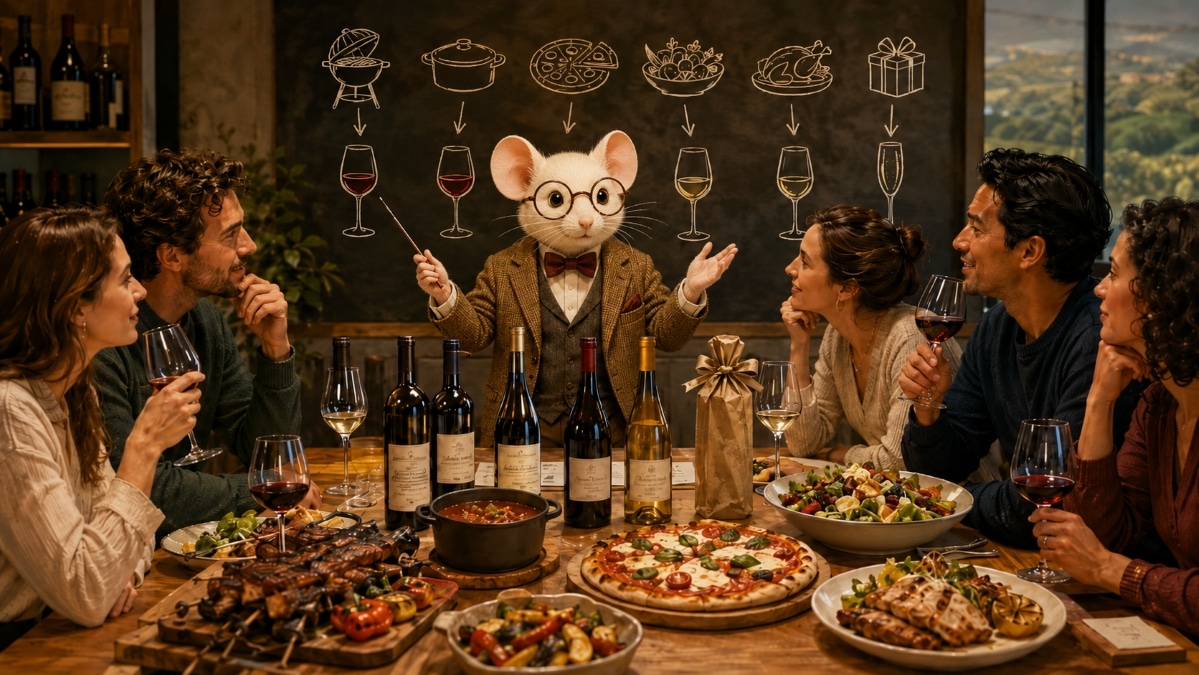
That is where the way forward begins. The terroir story does not need to disappear, but it does need to be translated into use. Not just: where does this wine come from? Also: where does it belong? At a barbecue, with a stew, with a light lunch, with pizza, as a gift?
That takes more than a different label or the word ‘apéritif’ in a marketing campaign. The wine, its format, price, availability and the language used to describe it must together make that place credible.
That is not a capitulation to trends. It is what good wine has always done: acquire meaning at the table. Understand that, and you talk less about the bottle and more about the moment. And that is precisely when wine gets another shot at the second bottle.
This article first appeared in Dutch on Winecastr.com: Ze hebben jouw wijn niet nodig. The English version was previously published on The Wine Shift’s Substack. Translated with the help of AI, checked and edited by the author.
Last updated: 9 September 2026