
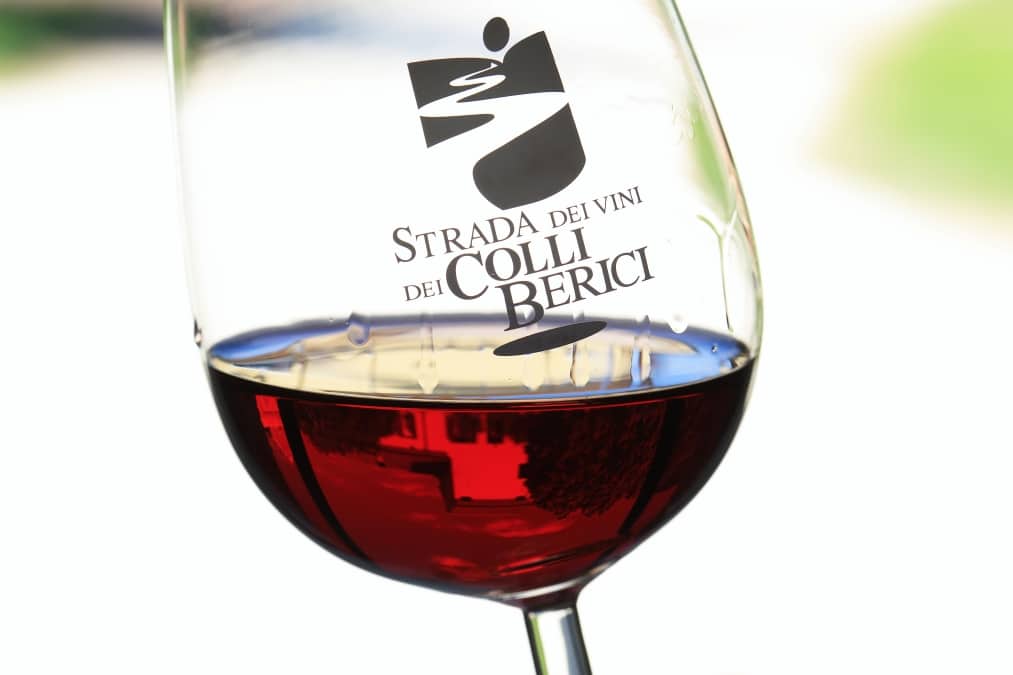
Picture this: six glasses, a screen, and Giovanni Ponchia, director of the Consorzio Colli Berici e Vicenza, explaining what sets his region apart. The online tasting, organised by Studio Cru, brought together a select international group. Six bottles and a calm conversation about terroir and viticultural choices. And yet there were two moments when recognition turned into doubt.
The first came with a wine that smelled and tasted like Grenache. The name on the label: Tai Rosso. The second came with a Carménère that had nothing to do with the green pepper and the round, full-bodied profile Chile has built for the grape. Colli Berici shows what the same grape can become when a grower makes different choices. That is the story of this region.
We think in grapes, but we taste choices
The reflex runs deep. Grenache belongs to Spain or the southern Rhône. Carménère belongs to Chile. These associations are learned, and they offer something to hold on to as long as producers follow them. As soon as someone deviates, confusion sets in. Colli Berici operates in exactly that space, with remarkably little fuss and excellent results.
The region lies in the Veneto, south of Vicenza. It offers limestone-rich soils, hills, sufficient altitude and good airflow. Famous names such as Amarone, Soave and Prosecco dominate perceptions of the Veneto; Colli Berici, however, charts its own course. The pressure of an image or a reputation is entirely absent here. That sounds like a disadvantage. In practice, it is freedom.
Tai Rosso: Grenache without the weight
The Tai Rosso from Piovene Porto Godi makes that mechanism immediately visible. The grape is genetically identical to Grenache, Garnacha and Cannonau; ampelography settled that long ago. Yet the wine tastes different from what you expect of the grape.
The producer harvests earlier. Alcohol stays at around thirteen per cent. Phenolic extraction remains limited, so colour and tannin support the wine instead of dominating it. Fermentation in stainless steel at low temperature preserves the fresh aromas. Floral notes, cherry and an easy-drinking texture follow. This is Grenache as you have not yet known it: light, precise, without the alcohol and heft of the Rhône.
That ties in with a movement that has shaped the wine market for several years now: lower alcohol, more tension, precision over power. Colli Berici starts that work in the vineyard. It brings freedom and, at the same time, a distinct identity.
[Image: a cellar in Colli Berici, with a barrel of Tai Rosso at the back. © Consorzio Colli Berici e Vicenza]
Carménère: a European profile
Inama’s Carminium follows the same logic, only more compact and clearer. Carménère has built a strong image in Chile: ripe, round and broad, with the familiar green pepper as its calling card. That profile results from climate, harvest timing and vinification. Colli Berici makes different choices.
The vines grow Guyot-trained on iron-rich clay over marine limestone, at 50 to 150 metres altitude with a southern exposure. Fermentation lasts three to four weeks in temperature-controlled stainless steel. The producer deliberately splits the ageing: partly in French barriques, partly in concrete. Concrete keeps fruit and structure taut; oak adds depth.
In the glass: dark red fruit, pleasant spice, a subtle vegetal touch and well-integrated, soft tannins. Carménère with a European profile.
The other four wines as context
The remaining four wines tell the second story of Colli Berici.
Cavazza’s Fornetto blends Merlot, Tai Rosso and Syrah from limestone-rich soil at 200 metres. Strawberry, black cherry and a hint of balsamic give it a familiar profile with a rhythm of its own. Dal Maso’s Casara Roveri is 100% Merlot, aged for eighteen months in French oak. Its blueberry and velvety finish prove that the region masters the heavy register as well as the light one.
Then there is the volcanic soil. Vitevis offers a blend of red varieties grown on basalt: ripe cherry, plum, spice and 14.5% alcohol. Casa Defrà combines Merlot and Cabernet Sauvignon on the same volcanic subsoil, with two years in oak. Expect black pepper, leather and a sulphurous note you would sooner associate with a crater lake than with a Venetian glass.
Colli Berici therefore has two faces underground: limestone and volcano. Both show up in the glass. That makes the region broader than the two surprises of Tai Rosso and Carménère suggest.
The wine is already here
Five of the six wines tasted already have an importer in the Netherlands. Colli Berici is no longer a discovery on the margins. The wine is already on the shelf; the public just has to find it.
Wine lovers will recognise the pattern. Regions move faster than their reputations. In many circles Italy counts as traditional, yet in practice it is one of Europe’s most dynamic wine countries. Colli Berici proves that on a small scale. The importers have already noticed. The rest will follow.
Grenache without Spain, Carménère without Chile: the logical outcome of a different way of looking.
Colli Berici has no legacy to defend. You can taste that freedom. And once it has been in your glass, you look at the rest differently.
This article first appeared in Dutch on Winecastr.com. The English version was translated with AI support and checked before publication.
Last updated: 12 October 2026